Plantain pasta asks for intention.
Not speed. Not shortcuts. Not autopilot cooking.
From the very beginning, this pasta was never designed to be treated like a last-minute meal or an afterthought on the plate. It was created to be handled with care, cooked with patience, and paired with flavors that respect the ingredient doing the real work.
This is plantain, real plantain.
Not a substitute. Not a trend. Not an experiment gone halfway.
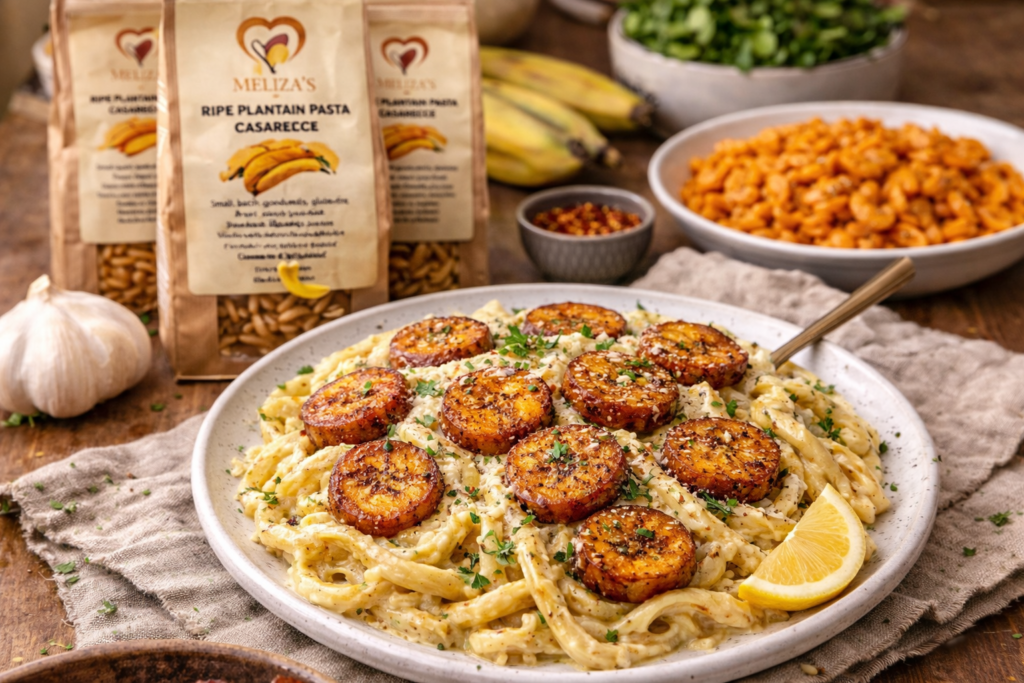
And when it’s cooked the way we always intended, especially as Creamy Garlic Plantain Pasta, it delivers something quietly powerful. Comforting, yes. But also layered, thoughtful, and full of character.
Why Creamy Garlic Was Always the Right Direction
Some ingredients demand attention. Others need balance. Plantain sits beautifully in between.
Its natural sweetness is subtle, almost shy, which makes it the perfect partner for a well-built creamy garlic pasta. Cream softens edges. Garlic adds depth. Together, they create a foundation that allows plantain pasta to stand confidently at the center of the dish.
This is why cream and pasta have always worked so well together—and why plantain pasta feels so at home in this format. A properly made creamy pasta sauce doesn’t overpower the pasta. It supports it.
This dish was never about excess. It was about harmony.
Cooking the Pasta With Respect
The process starts simply, but not carelessly.
Use plenty of water. Season it properly. Not aggressively—just enough to enhance, not dominate. Once the plantain pasta hits the pot, it needs attention. Unlike traditional wheat pasta, it cooks more gently. It responds to heat, movement, and timing.
Stir carefully. Watch closely.
This isn’t about chasing “al dente.” It’s about finding the right texture—soft, cohesive, and ready to hold a creamy garlic sauce without losing its integrity.
Plantain pasta doesn’t want to be rushed. And it doesn’t forgive neglect.
Garlic Is the Backbone, Not a Garnish
A proper garlic pasta doesn’t rely on shortcuts. Garlic powder won’t do the job here. Neither will rushing the process.
Fresh garlic, slowly cooked in butter or olive oil, is where the flavor begins. It should be fragrant, warm, and mellow, never burnt, never bitter. This step sets the tone for the entire dish.
Garlic brings familiarity. It grounds the cream and gives structure to the sauce. Without it, even the best cream pasta recipe can feel flat. With it, everything feels intentional.
Building a Creamy Garlic Sauce That Knows Its Place
This is where restraint matters most.
Cream should be introduced gently, over medium heat, allowing it to warm and thicken naturally. No rushing. No boiling. Season slowly. Taste often.
A great creamy pasta sauce coats the spoon softly. It doesn’t drown the pasta or steal the spotlight. It exists to enhance texture and carry flavor—not to overwhelm.
This is the difference between a heavy dish and a refined one. Between something forgettable and something you want to make again.
When done properly, the creamy garlic sauce feels smooth, balanced, and quietly indulgent.
Bringing Cream and Pasta Together the Right Way
The moment where cream and pasta meet is not a throwaway step. It’s the heart of the dish.
Instead of draining the pasta completely and dumping it into sauce, bring the plantain pasta into the pan while it’s still warm and slightly loose. Let it finish cooking in the sauce.
This allows the pasta to absorb flavor and gives the creamy garlic pasta its signature cohesion. A splash of pasta water can help loosen the sauce and create that silky finish every great cream pasta recipe depends on.
This is where texture is locked in. This is where the dish becomes whole.
Texture Over Everything
Creamy doesn’t mean heavy. Rich doesn’t mean greasy.
When cooked properly, Creamy Garlic Plantain Pasta has a texture that’s soft yet structured. The sauce clings gently. The pasta holds its shape. Each bite feels complete.
You should taste the plantain.
You should feel the warmth of garlic.
You should notice how the cream ties everything together without demanding attention.
That balance is intentional. That balance is the point.
What Belongs in the Dish (And What Doesn’t)
This pasta doesn’t need much. Overloading it misses the mark.
Roasted vegetables work well. Mushrooms add depth. Fresh herbs brighten the plate. But every addition should serve a purpose.
Too many extras distract from the plantain itself. And this dish was never meant to hide the pasta—it was meant to showcase it.
Even protein should be added thoughtfully. The creamy garlic pasta should remain the foundation, not the background.
Why This Method Matters
Plantain pasta wasn’t created to fit into existing rules. It was created to redefine what was possible.
Cooking it this way isn’t about following instructions. It’s about understanding intention. About recognizing why creamy pasta sauce works here. About knowing when to slow down and let the ingredient lead.
This dish represents patience. Care. Respect for process.
It’s why we return to Creamy Garlic Plantain Pasta again and again—not because it’s easy, but because it’s right.
The Final Plate
When everything comes together, the result speaks for itself.
The sauce coats the pasta effortlessly.
The garlic lingers without overpowering.
The cream softens without dulling.
It’s familiar, but undeniably different.
Not trying to be Italian.
Not trying to follow trends.
Not trying to explain itself.
Just plantain pasta, cooked the way it was always meant to be—through a creamy garlic sauce, with intention in every step.
That’s not just a recipe.
That’s a standard.
And once you cook it this way, there’s no reason to cook it any other way.